https://www.abeneth.com/the-ultimate-guide-to-caring-for-and-storing-premium-home-textiles-linen-silk-and-long-staple-cotton/
In most households, home textile storage is almost universally accepted as simply “folding it up and stuffing it into the closet.” The result, as you know, is that comforters become increasingly damp over time, silk fabrics become wrinkled like crumpled paper, wool blankets lose their fluffiness, and linen curtains experience a stubborn crease feast every year.
Frankly, the aging, dampness, and stiffness of many home textiles isn’t due to poor quality, but rather—the storage method is fundamentally incorrect.
Different materials = different storage logic.
This is the key step to double or even triple the lifespan of home textiles.
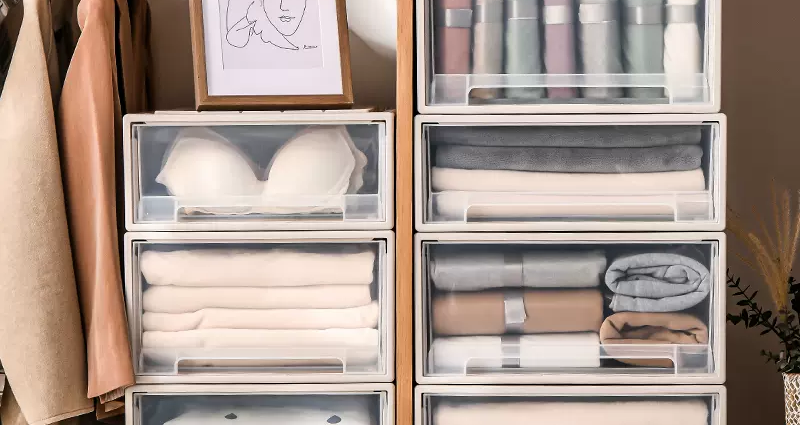
Therefore, many families are now looking for more systematic home organization methods , hoping that home textiles can “live well” after being stored away, rather than deteriorating as if locked in a dark room.
Let’s break it down by material, from cotton, linen, and silk to wool and blends, and address each one individually.
1. Cotton home textiles: durable but most prone to absorbing moisture.
Cotton is a material found in almost every household, but it is also one of the easiest materials to store improperly . Especially in the humid south, even a little improper handling can cause it to become damp, moldy, and smelly.
1) Cotton sheets/duvet covers: Simple, yet the easiest to make mistakes with.
Wash thoroughly, dry completely, and then store (this point cannot be emphasized more).
Do not use non-breathable plastic resealable bags.
We recommend using breathable cloth bags, cotton or linen storage bags, or storing directly in drawers.
Upright stacking (A4 size, standing upright like a book) allows for better ventilation and makes them easier to handle.
Cotton is highly absorbent, and vacuum bags are more prone to moisture absorption , especially during the rainy season, which is almost a “disaster start”.
2) Seasonal cotton quilts: The key is “breathability + moisture resistance”
Use a breathable cotton quilt bag and add some moisture-absorbing sheets.
Avoid placing it at the very bottom of the wardrobe (where the humidity is highest).
If placing it under the bed, be sure to add a moisture-proof mat.
Take it out to ventilate once every 2–3 months.
Cotton is a “durable” material, but the environment is the real key to controlling its lifespan.
2. Linen home textiles: breathable and natural, but most susceptible to creases.
Linen has a natural, lived-in feel, but “if not handled properly, it will become stiff, wrinkled, and ugly.”
Unlike the “natural wrinkles” of clothing, it has stubborn, difficult-to-restore creases.
1) How to preserve linen bedding more elegantly?
Rolling is better than folding : reduces fixed creases
Do not store it at the bottom of a drawer, as it will easily harden.
Cloth bags and drawers are sufficient; there’s no need to seal them completely.
Repeatedly folding in the same position must be avoided.
2) Linen curtains: Large items, requiring more storage solutions.
Clean and air dry
Roll-up storage offers the best wrinkle-resistant effect.
Wrap a layer of thin cotton cloth
Place it on the middle or top shelf of the wardrobe, not against the wall (to prevent dampness).
The “wrinkled beauty” of linen is something you wear, not something you store up until it’s worn out.

3. Silk Home Textiles: A luxurious material that requires “zero-pressure storage”.
Silk pillowcases and silk sheets may look thin, but they are so delicate that they cannot be stored carelessly . Humidity, light, and creases can all cause them to age and yellow.
1) Silk pillowcases/sheets: The “surface” must be protected.
Vacuum compression is absolutely prohibited.
with acid-free paper to prevent oxidation and creases.
Place in a separate cloth bag or on the top shelf of a drawer.
Do not let it come into direct contact with the desiccant (it will “dry out” the moisture).
2) Silk is most vulnerable to two things: moisture and sunlight.
Do not place it against a wall (the humidity on walls is higher than you might think).
Avoid transparent plastic boxes
It is recommended to place it in the middle or deep inside of the wardrobe.
If used correctly, it can last for many years; if used incorrectly, it will age in just one season.
IV. Wool and Cashmere Home Textiles: The key words are “insect-proof + non-compression”.
Wool quilts and cashmere blankets are fluffy, soft, and very comfortable, but they will be ruined immediately if they are crushed, damp, or attacked by insects.
1) How to store a wool quilt so it won’t collapse?
Cannot be compressed!
To maintain fluffiness, place it in a special comforter bag.
It must be thoroughly dried before storage.
Use natural insect repellent sachets (cedarwood chips, lavender).
Stay away from traditional mothballs (strong smell, unhealthy).
2) Cashmere blankets: Light, soft, and expensive, but require extra care.
Clean → Air dry completely → Shake loose
Wrap it with acid-free paper to reduce friction.
Place it in the middle of the wardrobe to avoid pressure.
Ventilate once every 3–4 months for long-term storage.
Cashmere is susceptible to insects, but what truly attracts insects is often a damp and enclosed environment .
V. Blended Home Textiles: Durable but Easily “Overlooked”
Blended fabrics (cotton + polyester, cotton + spandex, etc.) are used frequently and washed often, but incorrect storage methods are also common.
1) How to fold blended bedding?
Zippers, buttons, and other hardware can be wrapped in a small cloth bag to prevent them from scratching other fabrics.
The folding method is superior to the hard folding method.
Store in breathable cloth bags or drawers to reduce static electricity and dust attraction.
Do not store with pure cotton or pure linen (they have different humidity requirements).
2) The most suitable combination of tools
Semi-transparent cloth bag (breathable, easily identifiable)
Drawer dividers
Medium-sealed storage box (does not need to be completely airtight)
Blended fabrics are the most commonly used, so they need to be “categorized and easy to handle”.

VI. Different materials should be placed in different locations.
“How to fold” and “how to place” are not everything; the placement also affects the lifespan.
1) Moisture-absorbing materials: cotton, linen
→ It is more suitable to place it in:
Wardrobe middle and upper layers
Avoid pressing near the floor
Avoid placing it against a wall (walls have higher humidity).
2) Afraid of light and moisture: silk, wool
→ Best suited for:
The innermost part of the wardrobe
High floor
Opaque storage tools
3) Stratify according to usage frequency
High-frequency items (pillowcases, thin blankets): drawers/lower compartments
Mid-frequency (sheets, bedding sets): middle layer
Low-frequency items (winter quilts, velvet items): Top cabinet/Under bed (moisture protection required)
The essence of organization can be summed up in three words:
more durable, more economical, and easier to access.
VII. Conclusion: Choosing the right storage method can really extend the life of your home textiles by several years.
Home textiles are used every day, and they are also the items most prone to premature aging due to improper storage.
As long as you understand the characteristics of the materials, you can address the problem accordingly:
The cotton will no longer become damp.
The hemp will no longer develop “dead creases”.
Silk will not yellow or wrinkle.
Wool won’t collapse or attract moths.
Blended fabrics can also be neatly sorted and prevent tangling.
Good storage methods are not about making cabinets neater, but
about extending the lifespan and maintaining the comfort of every piece of home textiles you buy.
https://www.abeneth.com/the-ultimate-guide-to-caring-for-and-storing-premium-home-textiles-linen-silk-and-long-staple-cotton/